

Repair, Regenerate, Rebuild: BPC-157 and GHK-Cu Explained
Two of the most studied peptides for healing, recovery, and biological renewal
If you've spent any time in biohacking circles, recovery-focused fitness communities, or longevity spaces, you've almost certainly encountered BPC-157 and GHK-Cu. These two peptides sit at the intersection of deep repair and systemic regeneration — and the science behind them is genuinely exciting.
Let's break down what they are, what the research says, and why they've become staples in the toolkit of people serious about optimising their biology.
BPC-157: The Body's Own Repair Signal
What Is It?
BPC-157 stands for Body Protection Compound-157. It's a synthetic pentadecapeptide (15 amino acids) derived from a protein naturally found in human gastric juice. That origin is significant — it hints at its primary known function as a protector and repairer of tissue, particularly in the gastrointestinal system.
It is classified as a research peptide, meaning it is studied in research contexts. It has not yet completed full clinical trials for regulatory approval, but the body of animal and preclinical research is substantial.
What Does the Research Show?
BPC-157 has been studied extensively in animal models, with findings that have generated significant interest in the research and biohacking community:
Accelerated tissue repair. Studies have shown BPC-157 to accelerate healing of tendons, ligaments, muscles, and bone. One frequently cited mechanism is its ability to upregulate growth hormone receptors in tendon cells and enhance the formation of new blood vessels (angiogenesis) — both critical to tissue repair.
Gastrointestinal protection. Given its origin in gastric tissue, it's perhaps unsurprising that BPC-157 has shown strong protective effects on the gut lining, with research suggesting benefits for conditions ranging from inflammatory bowel disease to intestinal fistulae in animal models.
Anti-inflammatory properties. BPC-157 appears to modulate inflammatory pathways, including via the nitric oxide system, which plays a central role in vascular health and immune response.
Neuroprotection. Animal research has explored BPC-157's potential effects on the nervous system, including recovery from traumatic brain injury and spinal cord damage — areas of significant scientific interest.
Joint and connective tissue. For those dealing with injuries or the cumulative wear of an active lifestyle, the tendon and ligament repair data is particularly relevant. BPC-157 has been studied in models of Achilles tendon rupture, rotator cuff injury, and joint damage.
How Is It Used?
BPC-157 is typically administered via subcutaneous injection (directly under the skin) or intramuscularly for musculoskeletal applications. Oral and intranasal routes are also used, particularly for gut-targeted applications, though bioavailability differs by route.
Research-protocol dosing typically falls in the range of 200–500 mcg per day, though protocols vary. As with all peptides in the research context, this is for investigational use.
What to Know
BPC-157 is considered to have a strong safety profile in the preclinical literature, with no identified toxic dose in animal studies to date. It does not appear to be hormonal or to significantly interact with the HPTA (hypothalamic-pituitary-testicular axis), which is relevant for those mindful of hormonal balance.
It is currently on the World Anti-Doping Agency (WADA) monitoring list, so competitive athletes subject to testing should be aware.
GHK-Cu: The Copper Peptide Rewriting Ageing
What Is It?
GHK-Cu (glycyl-L-histidyl-L-lysine copper complex) is a naturally occurring copper peptide found in human plasma, saliva, and urine. Its concentration in the body is remarkably high in youth — around 200 ng/mL in plasma at age 20 — and declines significantly with age, dropping to around 80 ng/mL by age 60.
That decline tracks closely with the loss of regenerative capacity that characterises ageing. Coincidence? The research community doesn't think so.
What Does the Research Show?
GHK-Cu has one of the most fascinating research profiles of any peptide, touching everything from wound healing to gene expression to cancer biology:
Skin regeneration. GHK-Cu's topical applications are the most commercially established — it has been used in skincare for decades and is supported by substantial research showing stimulation of collagen synthesis, skin thickening, improved elasticity, and enhanced wound healing. This isn't just cosmetic; it reflects genuine cellular regenerative activity.
Gene expression modulation. This is where things get truly extraordinary. Research by Dr Loren Pickart and colleagues has shown that GHK-Cu can reset gene expression in diseased cells toward healthier patterns. A 2014 analysis found that GHK-Cu was capable of modulating the expression of over 4,000 genes — including upregulating genes associated with tissue repair and downregulating genes associated with inflammation, oxidative stress, and various cancers.
Antioxidant and anti-inflammatory activity. GHK-Cu has been shown to stimulate production of superoxide dismutase, one of the body's primary endogenous antioxidants, and to dampen pro-inflammatory cytokine activity.
Nervous system. Emerging research suggests GHK-Cu may promote nerve growth and have neuroprotective effects, including potential applications in cognitive decline.
Lung and organ protection. Animal research has shown GHK-Cu to have significant protective effects on lung tissue, with relevance to fibrotic and inflammatory lung conditions.
How Is It Used?
GHK-Cu is used both topically (in skincare and wound care products) and systemically via subcutaneous injection for full-body effects. The topical route is widely established; the systemic route is more commonly found in research and biohacking contexts.
Typical injectable research protocols use doses in the range of 1–3 mg, a few times per week. Topical concentrations vary widely by formulation.
The Longevity Angle
For those interested in ageing gracefully and maintaining biological function, GHK-Cu occupies a unique space. Its ability to influence gene expression at a broad level, combined with its natural decline with age and apparent safety profile, makes it a compelling tool for those thinking about longevity from the inside out.
Combining BPC-157 and GHK-Cu
Many practitioners and researchers have explored the complementary nature of these two peptides. Where BPC-157 excels in structural repair — tendons, ligaments, gut lining — GHK-Cu works at a more systemic and cellular level, influencing gene expression and tissue quality broadly. Together, they represent a comprehensive approach to regeneration.
Quality Matters — Enormously
With peptides like BPC-157 and GHK-Cu, source quality is critical. The research outcomes that make these peptides exciting depend entirely on the compound being what it claims to be, at the purity it claims to have. In a later post in this series, we'll go deep on how to assess peptide purity, what third-party testing means, and what separates research-grade peptides from inferior products.
The short version: buy from suppliers who provide verifiable testing documentation. Your outcomes depend on it.
Next up: Growth hormone peptides — how CJC-1295, Ipamorelin, and Tesamorelin are changing the conversation around body composition, recovery, and ageing.
Have questions? Chat with us directly on WhatsApp:
Chat with us on WhatsAppRead more
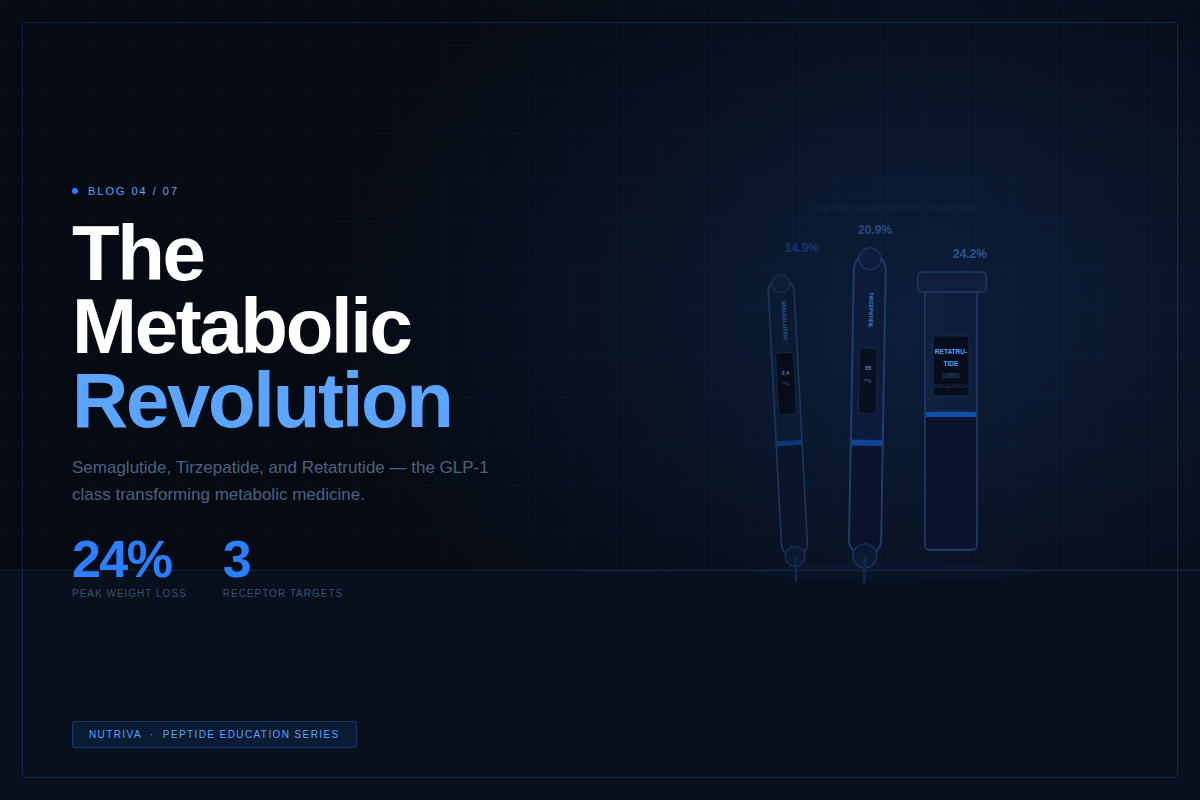
The Metabolic Revolution: Semaglutide, Tirzepatide, and Retatrutide
How incretin-based peptides became the most transformative medical tools of our era — and what they mean for the future of metabolic health Few developments in modern medicine have generated as mu...
Read more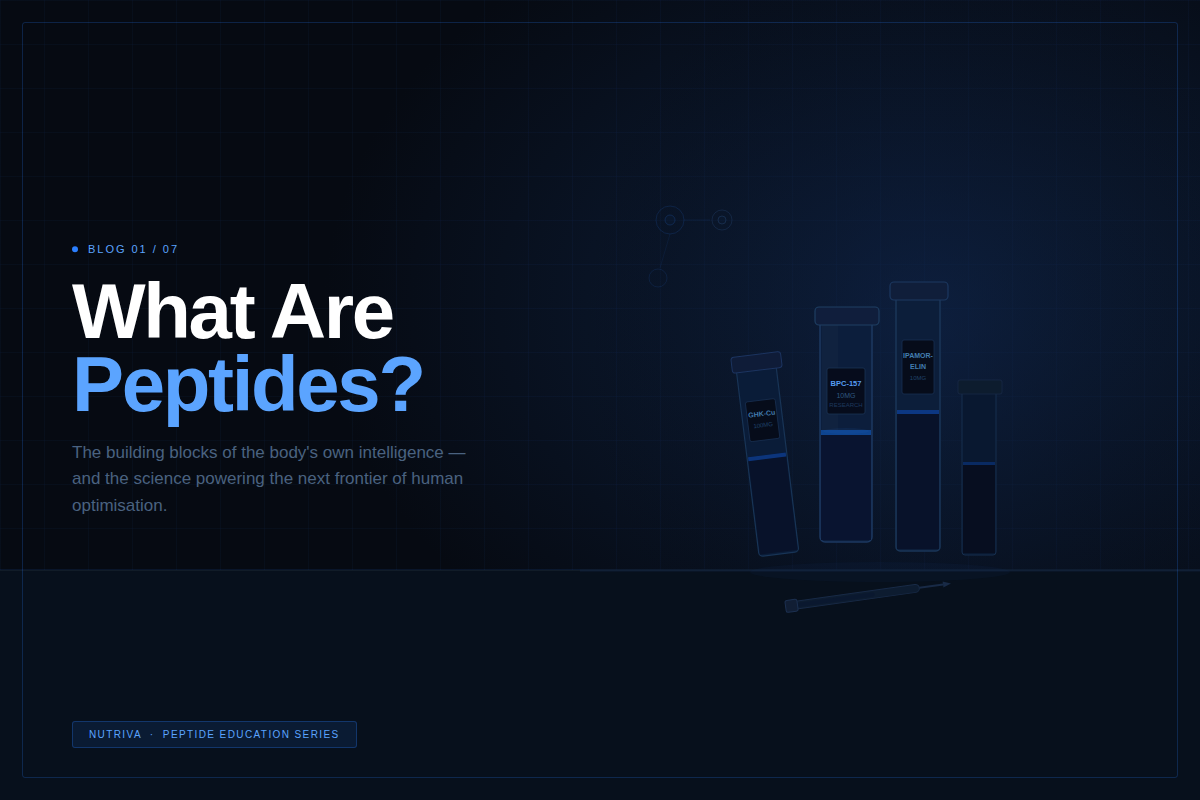
What Are Peptides? The Building Blocks of the Body's Own Intelligence
An introduction to the molecules powering the next frontier of human optimisation There's a quiet revolution happening in the world of health and performance — and it's being driven not by synthet...
Read more